If Your Makeup Looks Good IRL but Not on Camera
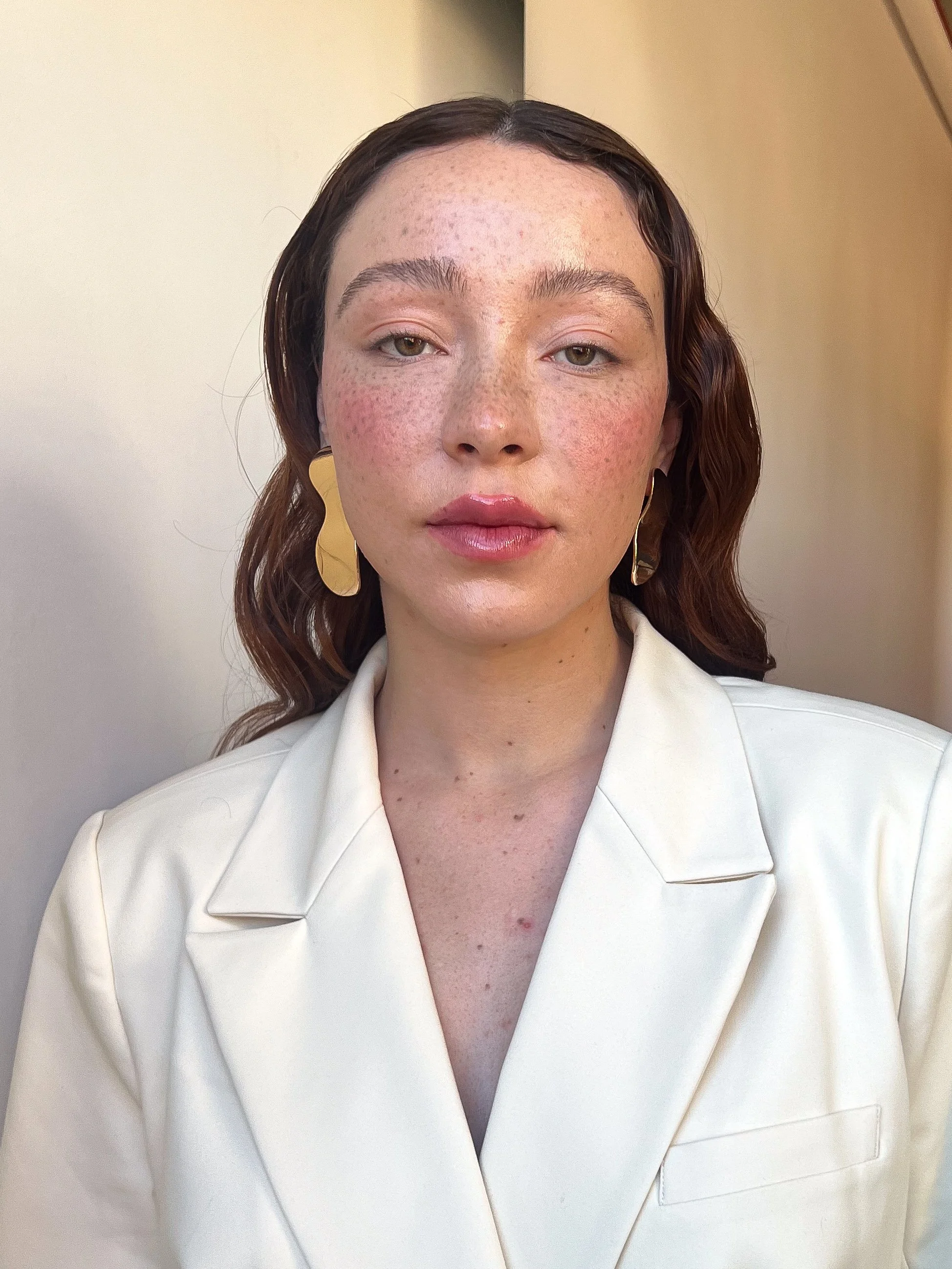
Light, shadow, and translation.
Looking flawless in person is one thing. Translating that same look on camera is another challenge entirely. Cameras interpret the face differently than the human eye. Lighting can flatten tone, exaggerate shine, and soften the natural structure of the face. Without small adjustments, even beautifully applied makeup can disappear on screen.
One of the biggest differences is shine. What reads as a healthy glow in real life can look overly reflective on camera. Slightly dialing back shine with a more matte finish often produces a better result. Highlight placement also becomes more strategic. Light naturally hits the cheekbones, brow bones, and the bridge of the nose. Emphasizing these areas restores dimension that cameras tend to flatten. Shadows play an equally important role. Subtle contour through the cheeks, temples, and jawline helps maintain structure and shape on screen.
When highlights and shadows work together, the face holds its dimension both in person and on camera. In a world filled with Zoom calls, social content, and constant photography, knowing how makeup translates on camera has quietly become an essential skill.
🖤 ✨ Follow Me for Daily Tips @makeupbyremi